
ALL ABOUT VANILLA
TK Quality vs. Gourmet Quality: What's the Difference for Vanilla Beans?
Vanilla is one of the world's most precious spices. Yet, not all beans are created equal. Two categories dominate the market: TK quality and Gourmet quality. If you've ever wondered about the differences in price, texture, or appearance between certain beans, this article will enlighten you.
🌿 TK Quality Vanilla Bean: The Economical Option
TK beans (short for "Tout-venant/Kilo" - meaning "mixed/per kilo") are characterized by their drier appearance and more modest size. Harvested and then stored for an extended period, they naturally have a reduced moisture content.
Key Characteristics:
- Moisture content between 15 and 20%
- Fine texture, sometimes slightly brittle
- Shorter format than average
- Correct but less intense aromatic profile
- Affordable price
Recommended Uses:
TK beans excel in preparations requiring prolonged infusion: spiced rum, homemade syrups, alcoholic extracts, or vanilla sugar. They are also suitable for recipes where vanilla plays a supporting rather than leading role, as well as for volume needs for resale or industrial use.
While they deliver a pleasant fragrance, their intensity and aromatic complexity remain inferior to premium beans.
✨ Gourmet Quality Vanilla Bean: Embodied Excellence
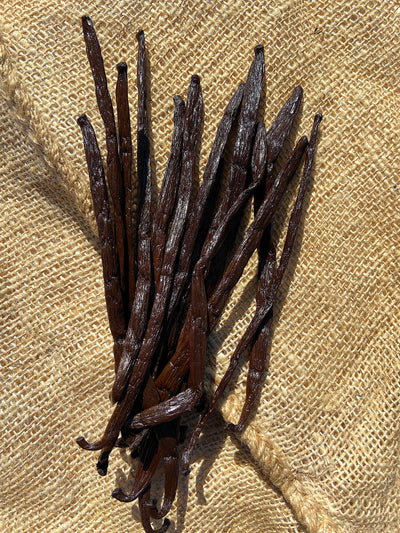
Gourmet quality represents the pinnacle of vanilla. These fresh, shiny, and supple beans release an exceptionally rich fragrance.
Key Characteristics:
- High moisture content (30 to 35%)
- Long, plump, and shiny beans
- Remarkable concentration of vanillin and aromatic compounds
- Supple and never brittle texture
- Intense, deep, and enchanting fragrance from the moment of opening
- Higher price, justified by incomparable quality
Recommended Uses:
Gourmet beans are naturally ideal for fine pastry: creamy desserts, soft brioches, artisanal ice creams, delicate flans. They are the preferred choice of chefs, caterers, and artisans who place vanilla at the heart of their creations.
It's worth noting that a single Gourmet bean often develops as many aromas as two TK beans.
🎯 How to choose the right quality?
Your choice depends primarily on your intended use:
Pastry and refined desserts → Gourmet
Long macerations (rum, alcohols) → TK
Homemade vanilla sugar → Both, Gourmet for a richer fragrance
Controlled budget → TK
Seeking excellence or a gift → Gourmet
💰 Understanding the Price Difference
Several factors explain the higher price of Gourmet beans: rigorous selection after harvest, higher moisture content (and thus greater weight), impeccable appearance, exceptional aromatic richness, and their use by demanding professionals.
Gourmet vanilla simply embodies the best that each terroir can offer.
🌟 In Summary
TK quality proves economical and effective for long preparations where vanilla infuses slowly.
Gourmet quality is essential for refined recipes where the fragrance must express its full intensity and warmth.
The final word: TK for practicality, Gourmet for gustatory emotion.
Vanilla Bean Cultivation: A Delicate and Fascinating Art
Vanilla, this most precious of spices, originates from a climbing tropical orchid: the vanilla vine. Its production requires patience, ancestral know-how, and ideal climatic conditions, which explains its rarity and exceptional value.
🌿 A Demanding Tropical Environment
The vanilla vine thrives exclusively in warm and humid regions, where temperatures fluctuate between 20 and 25°C. This subtle plant seeks morning light while dreading direct afternoon sun. For this reason, it is traditionally cultivated under shade, winding around stakes or support trees.
The soil also plays a decisive role: rich in organic matter, perfectly drained, and slightly acidic (pH between 5.5 and 6.5), it constitutes the essential soil for the vigor of the vanilla vine.
🌱 Planting: Propagation by Cuttings
The vanilla vine reproduces by cuttings. Segments of healthy stems are taken from adult plants, then potted in a rich and well-draining substrate. Once firmly rooted, these young plants can be transplanted into the ground, where their long growth will begin.
🌸 Ephemeral Flowering and Manual Pollination
After 3 to 4 years of patience, the vanilla vine finally produces its first flowers. These white and delicately scented flowers open for only a few hours in the early morning, creating a very short window for intervention.
It is during these precious moments that manual pollination takes place, a technical and meticulous gesture performed by an experienced "pollinator." Armed with a fine bamboo tool, this artisan delicately transfers pollen to fertilize each flower. This crucial step determines the formation of future pods and remains one of the most delicate aspects of cultivation.
🌾 Maturation: Nine Months of Transformation
Once pollinated, the fertilized flowers transform into green pods that begin a maturation period of approximately nine months. During this period, the pods gradually accumulate vanillin, the precious aromatic compound that gives vanilla its characteristic scent.
At full maturity, the pods begin to yellow and open slightly: the long-awaited signal for harvest.
🔥 Transformation: A Four-Step Process
Harvesting is only the beginning of a complex metamorphosis that will reveal the full aromatic potential of the pods:
1. Scalding
The pods are immersed in water heated to 65°C for exactly 3 minutes. This thermal shock immediately stops their enzymatic development.
2. Sweating
Wrapped in thick blankets for 24 to 48 hours, the pods begin their fermentation. It is during this phase that the first complex aromas of vanilla develop.
3. Drying
Spread on racks, the pods are exposed to the sun for several weeks. Each evening, they are carefully brought inside to avoid nocturnal humidity that would compromise their quality.
4. Curing
Once dried, the pods rest in wooden chests for several months, or even several years. It is during this curing process that their aromatic bouquet reaches its peak.
💎 A Precious and Vulnerable Crop
Vanilla production represents a considerable investment in time and expertise. Three to four years pass between planting and commercialization, requiring skilled labor and know-how passed down from generation to generation. This complexity explains why vanilla remains one of the most expensive spices in the world.
The vanilla vine is also fragile in the face of diseases, pests, and climatic hazards. Each stage, from manual pollination to final curing, can significantly influence the quality and yield of the harvest.
🌍 A Living Heritage
Despite these considerable challenges, vanilla cultivation continues in many tropical regions: Madagascar, Tahiti, Comoros, Mexico, Uganda... Driven by passionate growers, it perpetuates ancestral know-how and continues to enrich our gastronomy with this incomparable spice, the fruit of patient work and generous nature.
